 ▶
DevOps Toolbox's daily terminal stack for running coding agents
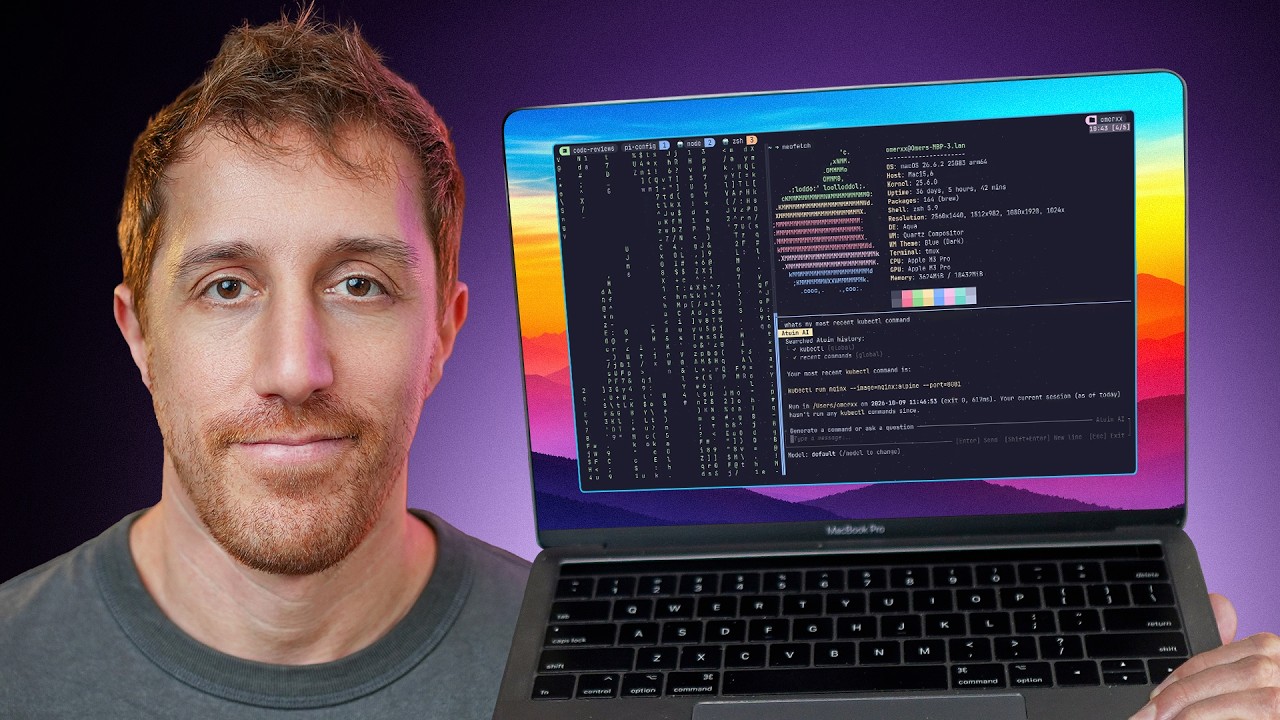
A tour of the terminal setup DevOps Toolbox actually kept after reviewing many tools: Ghostty as the terminal, tmux with sesh, sessionx and floax for sessions and popups, and workmux to tie git worktrees, tmux sessions and coding agents into one dashboard. Pi replaced OpenCode as the coding agent harness, with model switching, a forkable conversation tree and exportable sessions. Zoxide, Atuin, fzf, Starship, Neovim, Superfile and mise cover the rest. Why it matters: Parallel agent work is turning into a worktree and session management problem, not a model problem. One worktree and one session per agent task, with a dashboard showing diffs and PR status, is a concrete pattern for running several agents without losing track. The pick of a minimal, extension-first harness over a feature-heavy one is a useful signal too. Caveat: this is one developer's personal stack, and the video includes a sponsor segment.
Try this: Run your next two agent tasks in separate git worktrees, each with its own tmux session, and check whether reviewing their diffs side by side beats working on one branch.